You’re smack dab in the throes of your year-end performances, we know, we know, and we’re sending you lots of love! But remember: the spring season is right around the corner, and now is the time to start planning for that, too. 

So, while you continue to balance many plates, it’s time to add one more to the mix. Preparing early for your spring season will lead to successful showcases, more tickets sold, and more patrons excited about your work. And remember – curating your theatre’s season is one of the most rewarding parts of your job, so don’t forget to have fun. If you’re not sure where to start when it comes to planning for 2025, On The Stage offers 7 tips to prepare for a successful spring season. 

7 Tips to Prepare for Your Spring Season

Think About Your Mission

Your spring season should be an extension of your theatre’s overall story. After all, every theatrical season tells a story – one that should reflect and embody the mission and values of your organization. 

So, as you prepare for your spring season, read over your theatre’s mission statement and your list of values or core tenets. Talk with your team about these values and how to best reflect them in your season. Collaborating with your team also allows the most important cornerstones of your theatre’s mission to be at the forefront of your thoughts as you start your selection process. It enables you to prioritize work that aligns with your values and ignites your imagination and creativity as an artist. 

Focusing on that mission is an excellent first step in the planning process, setting the right tone going forward. 

Determine Your Shows Early

After you’ve thought long and hard about the type of season you’d like to have, it’s time to nail down the shows within it. 

Determining your shows early in the process has a myriad of benefits, including:

  • Helping you to determine the budget you’ll need depending on how big your shows will be. After all, a one-act play needs far less funds than a two-act musical.
  • Jump-starting the creative process with your team
  • Allowing you more time to purchase, build, or create costumes, set pieces, and props
  • Ushering in the beginnings of your marketing and promotional efforts, merchandising efforts, and other creative strategizing with plenty of time to workshop

In short, if you pick all your shows in one fell swoop long before rehearsals begin for the first show, you’re setting your season up for success and allowing ample time to plan everything out. 

Streamline Your Audition Process

Perhaps your audition process over the last few shows has been a bit… rocky. Maybe things were disorganized, actors were unprepared, or students got their feelings hurt about how roles were announced. A great way to start a rehearsal run on the right foot is by having organized, streamlined, professional auditions

As the leader of your theatre, you should always be thinking about innovative ways to create a safe, supportive, and positive environment during your auditions and long after. Less anxious actors give better auditions, leading to more confident performances and, in turn, a more successful theatre. A few suggestions for streamlining your audition process include:

  • Assembling a strong team of judges and/or observers with clearly outlined criteria 
  • Equipping your auditionees with everything they need to succeed – from telling them what to bring to what to prepare or even what to wear if you’ll be dancing or moving
  • Creating character breakdowns for more nuanced auditions
  • Producing an organized audition workflow, helping your team become a well-oiled machine ready to handle the day and its many curveballs
  • Remaining professional and unbiased, and announcing casting to everyone at once

Troubleshoot Rehearsal Schedules

Without a doubt, creating the theatre rehearsal schedule has to be one of the most stressful components of planning your season. Oh, the lead has a conflict during the dress rehearsal? Oh, the stage manager has a basketball competition during tech week? There are often just too many things to juggle! 

When everything gets hectic, it’s vital to the success of your production to have an organized plan, and that starts with an organized schedule. Before rehearsals begin – and even at auditions, if you want to be an overachiever – make sure you establish the following:

  • Secured performance dates
  • Dress rehearsal and tech week dates
  • Rehearsal absence policies 
  • Expectations about rehearsals, like timeliness or cell phone usage
  • The time commitment needed for each cast and crew member
  • The possibility of additional rehearsals or private sessions for leads, if need be

When you establish a strong schedule and clear intentions from the jump, your season is far more likely to be successful. 

Implement New Ticketing Options 

Your ticketing options should be as diverse as the theatre itself! If you’re looking to usher your theatre into a new year with style, why not consider implementing new ticketing options for your patrons?

Perhaps, as of now, you simply offer general admission tickets to your shows with a set price. While this form of ticketing has its merits, there are ways to increase your revenue and your accessibility through ticketing options like:

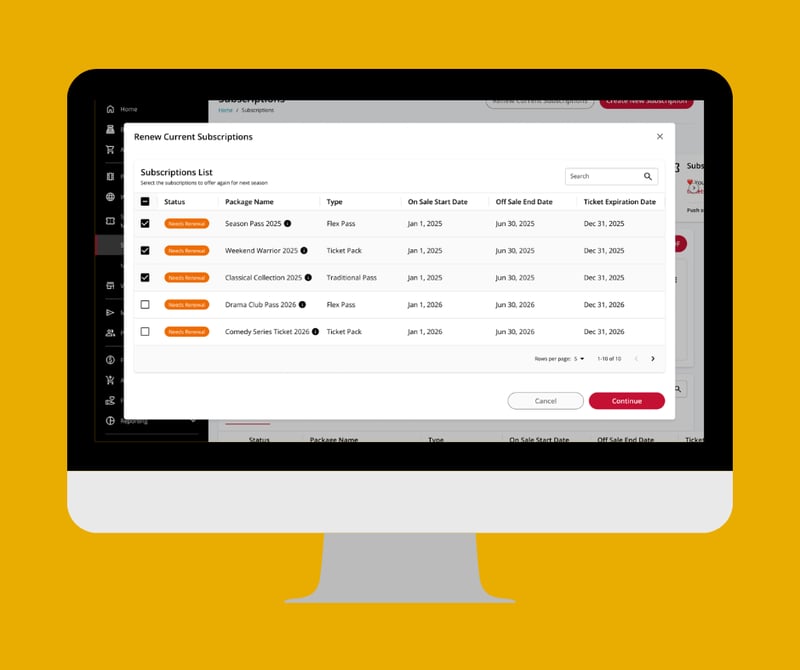
  • Varied subscription packages. They reap plenty of benefits, from building loyalty and increasing conversions to padding your bottom line and keeping your patrons coming back time and time again. These packages can range from traditional to flex to ticket packs, enabling your audience to choose their shows, dates, and seats. 
  • Pay-What-You-Can pricing models. These models allow patrons to pay what they can afford for an event. This model is an example of the gift economy, where there is no set (or a very low set) cost to attend an event, and guests can dictate their own pricing. 

No matter what ticketing options you want to implement, now is the time to plan and troubleshoot any issues. After all, when it comes time to start selling, you don’t want your box office in flux. 

Plan Out Your Marketing Strategies 

Marketing is not a one-size-fits-all process and, if done correctly, can truly be the lifeblood of any performing arts organization – whether you’re an educational theatre, community theatre, dance company, or professional entity. 

This means crafting a well-thought-out, multi-pronged marketing strategy is critical to filling seats, generating revenue, increasing donations, and elevating your productions. When mapping out your marketing schedule for the spring season, make sure to:

  • Set your goals early and ensure they are S.M.A.R.T. – specific, measurable, achievable, relevant, and time-bound. 
  • Focus on your audience segments and understand your target demographics.
  • Craft specific messages that appeal to your patrons and their interests.
  • Plan ahead, way ahead. The last thing you want to do is worry every single day about what to post on your social media channels or how to draft marketing materials for your patrons. 
  • Focus on creating lasting connections with your audience and building a community that returns season after season.
  • Create a multi-pronged approach that includes several communication channels. 

Need more help on this one? Download our Marketing Timeline Guide for the Performing Arts

Consider All the Logistics

As you plan for a great season, remember that there are more logistics at play than what meets the eye. Ask yourself the following questions to get a true handle on how to best craft your season:

  • Looking at the numbers now, how much can I realistically spend on each production in my schedule? 
  • How many employees do I have on my team? Am I creating obtainable goals for them with the resources I can provide? 
  • If you’ve chosen to produce a popular musical: Do I have the funds to produce this show, considering costumes, props, and rights to the script and music? 
  • Looking at my talent pool, will they be able to pull off the shows I’ve chosen? On the flip side, are these pieces challenging enough for my actors and crew? 
  • With the shows I’ve chosen draw in enough ticket sales and interest from my patrons?

In short, a sense of balance and taking stock of your priorities will be useful while planning your spring season. Remain realistic, don’t bite off more than you can chew, and remember that the devil’s in the details, especially financially. 

How On The Stage Can Help

While planning your spring season, remember that smart, strategic decisions today allow you to achieve your vision for tomorrow in a sustainable and achievable manner. Choosing a season of theatre that matches where your institution is at this moment in time, reflects your values, and is of service to your community of artists and audiences alike is sure to bring joy to everyone who gets to be a part of the experience. 

If you need a bit more guidance on planning your season or just need a partner in the effort, partner with On The Stage today. On The Stage empowers thousands of organizations with ticketing, box office, marketing, fundraising, and reporting tools in one robust platform – for free. If you’re ready to elevate your theatre for yourself, your crew, and your patrons, download our Guide to Theatrical Season Planning and book a personalized demo today.

Related products and solutions